The ruling sets a precedent in Georgia, Florida and Alabama. The case of a Cuban family clarifies which type of immigration parole counts toward permanent residency.
DWORK PWR NEWS | November 19, 2026
ATLANTA, Ga. The U.S. Court of Appeals for the Eleventh Circuit ruled on November 17 that release on recognizance documented on Form I-220A under Section 1226 of federal law does not, by itself, meet the Cuban Adjustment Act’s parole requirement. The court denied a petition for review from the Aguiar-Fernández family, who had sought permanent residency.
The family was briefly detained after crossing the border into Arizona in June 2021. Immigration authorities released them on Form I-220A. According to the ruling, the Department of Homeland Security never granted the family parole under Section 212(d)(5)(A) of the Immigration and Nationality Act.
What it means for people with an I-220A or I-220B
Applicants under the Cuban Adjustment Act generally must show that they were inspected and admitted or granted qualifying parole. They must also have been physically present in the United States for at least one year and meet the law’s other requirements. Someone with an I-220A may still meet the admission or parole requirement through a separately documented admission or grant of parole.
The ruling addressed Form I-220A. Form I-220B is an ICE order of supervision issued after a final removal order. That form alone also does not establish the parole required to adjust status under the act.
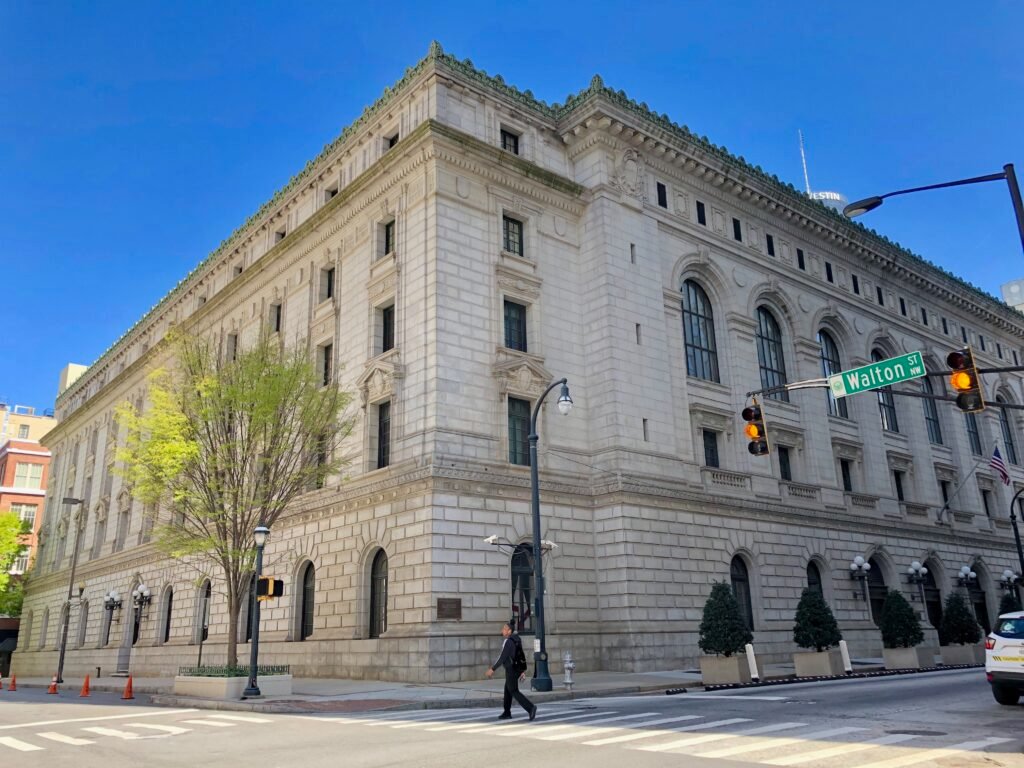
Photo caption: The Elbert P. Tuttle courthouse, home to the U.S. Court of Appeals for the Eleventh Circuit in Atlanta, Georgia. File photo by Warren LeMay / Wikimedia Commons.